Understanding Tennis Court Netting Grid Outline for Design and Communication Projects
When you are working on a design, presentation, or informational project related to sports facilities, the visual assets you choose can make a significant difference in clarity and impact. One resource that frequently appears in such contexts is the tennis court netting grid outline. This graphic element serves a specific purpose, and understanding what it offers, how it compares with other visual approaches, and when to use it can help you make a more informed choice for your work.
This article explores the tennis court netting grid outline in practical terms. We will look at what makes it distinct, how it stacks up against similar visual formats, its strengths and limitations, and the situations where it is likely the best fit—or where another option may serve you better.
What Is a Tennis Court Netting Grid Outline?
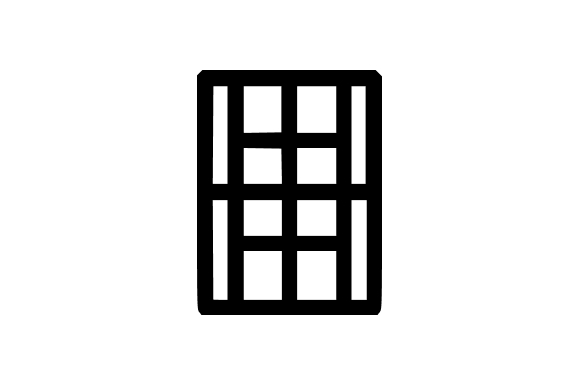
A tennis court netting grid outline is a graphic representation that focuses on the structural framework of a tennis court’s netting system. Unlike a full photographic image or a highly detailed technical drawing, this outline typically uses clean lines and a grid pattern to depict the net, the court boundaries, and sometimes the supporting posts. The emphasis is on shape, proportion, and spatial relationships rather than texture, shading, or realistic detail.
This type of asset is especially useful in contexts where you need to communicate the layout or configuration of a tennis court netting system without distracting visual noise. For instance, in a diagram explaining court dimensions, a safety guideline poster, or a presentation slide about facility upgrades, the grid outline provides immediate visual orientation.
The format is often delivered in scalable vector files such as SVG and EPS, along with high-resolution JPG and transparent PNG versions. This range of formats makes the tennis court netting grid outline adaptable across print, web, and multimedia projects.
How It Compares with Similar Visual Resources
To appreciate where the tennis court netting grid outline fits best, it helps to compare it with other common visual styles used for sports court graphics.
Full Photographic Images
A photograph of a tennis court netting system offers realism, texture, and context. It shows the actual appearance of the net, the court surface, lighting, and surroundings. This can be powerful for marketing materials, brochures, or websites where atmosphere and authenticity matter. However, photographs can be cluttered, include irrelevant details, and are harder to edit or scale without losing quality. The tennis court netting grid outline, by contrast, strips away all extraneous information, focusing purely on the structural layout. This makes it far more suitable for technical diagrams, instructional materials, and minimalist design themes.
Detailed Technical Drawings
Technical blueprints or CAD-style drawings provide precise measurements, material specifications, and construction details. These are essential for architects, contractors, and facility planners who need exact data to build or modify a court. Yet for many communication purposes—such as a presentation to stakeholders, an infographic for the public, or a quick visual in a training manual—such high detail can be overwhelming. The tennis court netting grid outline strikes a balance: it is clean and precise enough to convey the essential structure, but simple enough to be understood at a glance.
Icon or Symbol Styles
Minimal icons or symbols representing a tennis net are common in wayfinding signs, mobile apps, or website menus. These are highly simplified, often abstract, and designed for instant recognition at small sizes. While effective for navigation and branding, they lack the spatial and proportional information that a tennis court netting grid outline provides. If your goal is to illustrate the relationship between the net and the court, or to show how netting is positioned relative to playing areas, the grid outline offers much more utility.
Strengths of the Tennis Court Netting Grid Outline
Understanding the specific advantages of this graphic can help you decide when it is the right choice.
- Clarity and simplicity: The outline format removes unnecessary detail, making the structure easy to perceive. This is especially valuable in educational materials, safety signage, and diagrams where the goal is to inform rather than impress.
- Scalability without loss: Because the asset is available in vector formats like SVG and EPS, you can resize it for a billboard or a business card without any degradation. For projects that require flexible sizing, this is a practical advantage over photographs or low-resolution graphics.
- Versatility across media: With both vector and raster formats provided, you can use the tennis court netting grid outline in print design, web layouts, presentations, infographics, stickers, and promotional materials. The transparent PNG version is particularly useful for overlaying the graphic onto backgrounds, photos, or colored panels.
- Neutral and adaptable: The outline style does not carry strong stylistic baggage. It works equally well in modern minimalist designs, technical documents, vintage-inspired layouts, or corporate presentations. Its neutrality allows it to blend with different color schemes, typography, and branding elements.
- Cost-effective and time-saving: Creating a custom tennis court netting grid outline from scratch requires design skill and time. Having a ready-to-use asset in multiple formats can streamline your workflow, especially if you are working on tight deadlines or with limited design resources.
Tradeoffs and Limitations
No single visual asset is right for every situation. The tennis court netting grid outline has limitations that are worth weighing.
- Lack of realism: If your project relies on creating an immersive or emotional connection—such as a promotional video for a tennis club or a lifestyle magazine feature—the outline may feel too abstract or sterile. A photograph or a rendered illustration would likely be more effective in those contexts.
- Limited contextual information: The grid outline shows the netting structure in isolation or with minimal court reference. It does not include surroundings, surface texture, lighting, or people. For projects that need to convey the experience of being on a tennis court, this format falls short.
- Potential for misinterpretation: For audiences unfamiliar with technical diagrams or sports facility layouts, the outline may not be immediately recognizable. In such cases, adding labels, a legend, or combining the outline with other visuals can improve comprehension.
- Not suited for detailed construction or compliance documentation: If you need to specify exact mesh sizes, rope tensions, post dimensions, or regulatory standards, the tennis court netting grid outline is too generalized. A detailed technical drawing or a specification sheet would be required.
When the Tennis Court Netting Grid Outline Is the Right Choice
Based on its strengths, here are scenarios where this asset is likely the best fit:
- Infographics and educational materials: If you are creating a visual guide about tennis court dimensions, net height regulations, or safety zones, the outline provides a clean base that can be annotated with arrows, measurements, and callouts.
- Presentations and reports: In a business or academic presentation about sports facility planning, the outline helps illustrate concepts without distracting from the spoken message. Its simple form keeps the audience focused on the data or argument.
- Minimalist or modern design projects: For branding materials, website graphics, or print layouts that follow a clean, minimal aesthetic, the grid outline aligns well with that visual language.
- Promotional materials for tennis-related products or services: If you are marketing court maintenance services, netting replacement, or tennis equipment, the outline can serve as a versatile graphic element that communicates the domain without overwhelming the promotional message.
- Quick edits and overlays: The transparent PNG format makes it easy to place the outline over photos, colored backgrounds, or patterns for social media graphics, flyers, or banners.
When Another Option May Be More Suitable
There are also clear situations where you might look beyond the tennis court netting grid outline:
- Marketing campaigns targeting players or club members: Here, emotional appeal and atmosphere matter. Use photographs or lifestyle imagery that shows people enjoying the game.
- Technical or construction documentation: For engineers, contractors, or facility managers, detailed CAD drawings with specifications are necessary.
- Wayfinding or signage systems: If you need a symbol to direct people to a tennis court, a simplified icon may be more recognizable at a distance and in small sizes than a grid outline.
- Video or animation projects: The outline can be used as a static element, but if you need animated netting or dynamic court visualizations, a vector animation or 3D model would be more appropriate.
Practical Example: Choosing the Right Visual for a Tennis Club Brochure
Imagine you are designing a brochure for a tennis club that is upgrading its facilities. The brochure needs to inform members about new netting, court resurfacing, and safety improvements. You have several visual options:
On the cover, you might use a high-quality photograph of the newly installed netting with sunlight filtering through, creating an inviting atmosphere. Inside, for the section that explains the technical improvements—such as the height adjustment mechanism and mesh density—you could place a tennis court netting grid outline labeled with key features. This combination gives readers both the emotional appeal of the photo and the clear informational value of the outline.
If you were creating a one-page handout summarizing the construction timeline and court specifications, the outline could serve as the primary visual, with measurements and annotations added directly. In contrast, a social media post highlighting the new netting might work better with a short video or a before-and-after photo set.
Decision Factors to Consider
When evaluating whether the tennis court netting grid outline is right for your project, think about the following:
- Primary goal: Are you informing, persuading, or inspiring? The outline excels at informing with clarity. It is less suited for persuasion or inspiration that relies on emotion.
- Audience familiarity: How familiar is your audience with technical diagrams? For general consumers, you may need to combine the outline with explanatory text or contextual visuals. For facility managers, coaches, or sports administrators, the outline is likely immediately understandable.
- Design context: Does your overall design aesthetic lean toward minimalism, modernism, or technical accuracy? The outline fits naturally in these styles. If your design is more organic, whimsical, or highly detailed, the outline may feel disconnected.
- Format requirements: Do you need scalability, transparency, or high resolution for print? The availability of SVG, EPS, JPG, and PNG formats makes the tennis court netting grid outline a flexible choice for diverse output needs.
- Budget and timeline: If you have limited time or design resources, a ready-made asset in multiple formats can save significant effort compared to creating a custom graphic.
Final Considerations
The tennis court netting grid outline is a practical, versatile graphic resource that fills a specific niche in visual communication. Its clean structure, scalability, and adaptability make it a strong choice for informational, technical, and minimalist design projects. Yet it is not a universal solution. Photographs, detailed technical drawings, and simplified icons each serve different purposes and audiences.
The key to making an effective decision is to match the visual asset to the communication goal, the audience, and the design context. By understanding what the tennis court netting grid outline does well—and where it has limitations—you can use it deliberately and effectively. Whether you are a designer creating a technical diagram, a marketer developing promotional materials, or a content producer building an infographic, this resource can support your work when applied thoughtfully.
Ultimately, the best choice is the one that helps your audience understand your message quickly and clearly. The tennis court netting grid outline is a tool that, in the right situation, does exactly that.