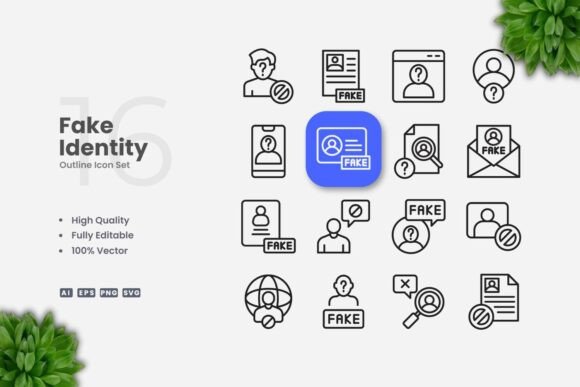
Fake Identity Outline Icons: A Versatile Design Solution for Modern Projects
Fake Identity Outline Icons offer a unique blend of simplicity and functionality, making them ideal for a wide range of design applications. These icons are characterized by their clean lines, minimalistic approach, and clear visual representation. Their outline style allows for easy customization and adaptability across different platforms and formats, ensuring they maintain visual consistency regardless of the medium.
What Makes Fake Identity Outline Icons Distinct?
Fake Identity Outline Icons stand out due to their focus on clarity and versatility. Unlike more complex icon sets that may include detailed shading or intricate patterns, these icons use a straightforward outline format. This design choice makes them highly readable, especially at smaller sizes, which is crucial for digital interfaces like mobile apps or websites.
The high-quality vector format ensures that the icons remain sharp and scalable without losing detail. Whether used in print materials such as flyers or digital banners, they maintain their integrity. The ability to adjust colors, stroke weights, and other attributes gives designers flexibility, allowing them to align the icons with specific brand guidelines or project requirements.
Comparison with Similar Design Options
When compared to other icon styles, such as filled icons or 3D designs, Fake Identity Outline Icons provide a more neutral and adaptable aesthetic. Filled icons often have a bolder presence, which can be effective for emphasis but may not work as well in subtle or minimalist contexts. On the other hand, 3D icons add depth and realism but may complicate the overall design if not used carefully.
Outline icons also differ from line icons, which tend to be even simpler and sometimes less distinct. While line icons can be useful for low-detail environments, they may lack the clarity needed for more complex representations. Fake Identity Outline Icons strike a balance between simplicity and definition, offering a middle ground that works across various design scenarios.
Strengths and Tradeoffs of Fake Identity Outline Icons
One of the key strengths of Fake Identity Outline Icons is their ease of customization. With access to source files in formats like Adobe Illustrator (AI) and Encapsulated PostScript (EPS), users can modify colors, stroke thickness, and even individual elements without compromising quality. This level of editability makes them particularly valuable for designers who need to tailor icons to specific projects or branding needs.
Another advantage is their compatibility with multiple file types. The inclusion of SVG, PNG, and EPS files ensures that the icons can be used in both digital and print media. This flexibility reduces the need for separate icon sets for different platforms, streamlining the design process.
However, there are tradeoffs to consider. The outline style may not convey the same level of visual interest as more elaborate icon designs. For projects that require strong visual impact or storytelling, alternative icon styles might be more appropriate. Additionally, while the clean design is a benefit, it may also mean that the icons lack the uniqueness that some designers seek for highly branded or creative projects.
Best Fit Situations for Fake Identity Outline Icons
Fake Identity Outline Icons are particularly well-suited for projects that prioritize clarity and consistency. They are an excellent choice for website navigation systems, where users need to quickly identify functions or sections. Their simplicity also makes them effective for mobile app interfaces, where screen space is limited and readability is essential.
These icons also perform well in infographics and data visualization, where they can be used to represent concepts or categories without overwhelming the viewer. In print materials such as brochures or posters, their scalable nature ensures that they remain legible at any size.
For designers working on multi-platform projects, the availability of multiple file formats makes Fake Identity Outline Icons a practical option. Whether the final output is a social media graphic, a banner ad, or a book illustration, the icons can be adapted without significant effort.
Limitations and Decision Factors
Despite their advantages, Fake Identity Outline Icons may not be the best fit for every situation. Projects that require a strong visual identity or a unique aesthetic may benefit from more distinctive icon styles. Additionally, for large-scale commercial use, designers should verify licensing terms to ensure compliance with any restrictions.
When deciding whether to use Fake Identity Outline Icons, it’s important to consider the project’s goals, target audience, and design context. For example, a corporate website might benefit from the professional appearance of these icons, while a creative portfolio could require a more stylized approach. Evaluating these factors helps ensure that the chosen icons support the overall design vision.
Practical Examples and Use Cases
Imagine a designer creating a mobile app for a financial service. The app requires clear, intuitive navigation, and the use of Fake Identity Outline Icons would help maintain a clean and professional look. The icons can be easily resized and recolored to match the app’s theme, ensuring a cohesive user experience.
In another scenario, a marketing team designing a series of social media posts might use these icons to highlight key features of a product. The outline style allows for quick adjustments, and the transparency in PNG files ensures that the icons can be placed over various background images without visible borders.
For a small business owner preparing a flyer for a local event, the scalability of the icons means they can be used effectively in both digital and print formats. The ability to edit stroke weight and color makes it simple to match the flyer’s overall design scheme.
When to Choose Alternative Icon Sets
If a project requires a more detailed or expressive visual style, alternative icon sets may be more suitable. For instance, a children’s app might benefit from colorful, illustrated icons that engage young users. Similarly, a luxury brand might prefer icons with a more sophisticated or artistic touch to reflect its image.
Designers should also consider the complexity of the task when selecting icons. For highly specialized or niche applications, custom-designed icons may offer better alignment with the project’s unique needs. However, for general-purpose use, Fake Identity Outline Icons provide a reliable and efficient solution.
Conclusion: A Flexible and Reliable Design Resource
Fake Identity Outline Icons offer a versatile and practical solution for a wide range of design needs. Their clean, customizable design makes them suitable for websites, mobile apps, print materials, and more. By understanding their strengths, limitations, and best-fit scenarios, designers can make informed decisions about whether these icons are the right choice for their projects.
Whether used as a standalone resource or integrated into a larger design system, Fake Identity Outline Icons provide a reliable foundation for creating visually consistent and functional designs. Their adaptability and high-quality format ensure that they remain a valuable tool for professionals across various industries.